Introduction
That call or email telling you the position’s been eliminated hits differently than any budgeting problem you’ve dealt with before, doesn’t it? Financial recovery after job loss isn’t just about numbers on a spreadsheet — it’s genuinely stressful, and the financial steps matter just as much as giving yourself permission to feel rattled for a bit. Let’s go through what actually needs doing, in a realistic order.
The First 48 Hours: What to Actually Do
Quick answer: The immediate priority for financial recovery after job loss is calculating your exact monthly essential expenses and comparing that against your available emergency fund and severance, so you know precisely how many months you have before things get tight.
Step 1: File for Unemployment Benefits If Applicable
Depending on your employment type and location, check if you’re eligible for any unemployment support or benefits through your state or through schemes tied to your previous employment. Many people skip this step out of pride or simply not knowing it exists, and end up leaving money on the table.
Step 2: Cut Non-Essential Spending Immediately
This isn’t the time for gradual budget trimming — pause subscriptions, delay big purchases, and put discretionary spending on hold entirely until you have income visibility again.
- Cancel or pause OTT subscriptions and gym memberships temporarily
- Delay any planned large purchases or vacations
- Switch to essential-only grocery shopping for a few months
Step 3: Prioritize Which Bills Get Paid First
Not all expenses carry equal urgency. Rent, EMIs (especially secured loans like home or car loans where default risks the asset), and health insurance premiums should generally take priority over credit card minimums or discretionary subscriptions.
Step 4: Talk to Your Lenders Proactively
I’ve noticed people often avoid calling their bank out of embarrassment, but most lenders have hardship provisions — a temporary EMI moratorium or restructured payment plan — if you reach out before you actually miss a payment, rather than after.
Step 5: Tap Your Emergency Fund Strategically
If you built one, this is exactly what it’s for [link to related guide on how to build an emergency fund here]. Use it deliberately though — calculate a monthly withdrawal amount based on your expected job search timeline, not just spending freely because it’s “there.”
Step 6: Explore Temporary or Freelance Income
Picture someone with a marketing background picking up freelance consulting gigs while job hunting for a full-time role — even partial income significantly extends how long your savings last and reduces financial pressure during the search.
Step 7: Review and Possibly Pause Investments
For very tight situations, pausing SIPs temporarily (not liquidating existing investments in a panic) can free up monthly cash flow. Liquidating long-term investments should generally be a last resort, done only after the emergency fund and other options are exhausted.
Step 8: Update Your Health Insurance Situation
If your health insurance was employer-provided, this often ends immediately or shortly after job loss — a genuinely important gap to close quickly, either through a personal policy or, if available, a portability option from your employer’s group policy.
Rebuilding After You Find New Employment
Once income resumes, rebuild your emergency fund first before resuming discretionary spending at the old level — this is the step people skip most often, jumping straight back into old spending habits without first restoring the safety net that just got depleted.
FAQ
How long should an emergency fund last during a job search? This varies by role and market conditions, but many financial planners suggest planning for 3-6 months of essential expenses, sometimes longer for specialized or senior roles that take longer to fill.
Should I withdraw my EPF during a job loss? This should generally be a last resort, since early EPF withdrawal reduces your long-term retirement corpus significantly — explore other options like reduced spending and lender negotiations first.
Is it okay to use a credit card for essential expenses during financial recovery after job loss? It can work as a short-term bridge for genuine essentials, but be very cautious about accumulating high-interest debt during an already stressful period without a clear income timeline.
Should I tell my landlord or lender immediately after losing my job? Generally yes for lenders, since proactive communication often leads to better hardship arrangements than waiting until you’ve already missed a payment.
How do I stay motivated during a long job search while managing finances? Breaking the process into smaller weekly financial and job-search goals, rather than one overwhelming target, tends to help most people manage the stress of an extended search more sustainably.
Conclusion
Financial recovery after job loss is genuinely hard, but having a clear, prioritized sequence of steps — cutting spending, negotiating with lenders, using your emergency fund deliberately — makes the situation more manageable than it feels in the first panicked days. Take it one week at a time, and don’t hesitate to explore freelance or temporary income while job hunting. [link to related guide on how to build an emergency fund here] to make sure you’re better prepared if this ever happens again.
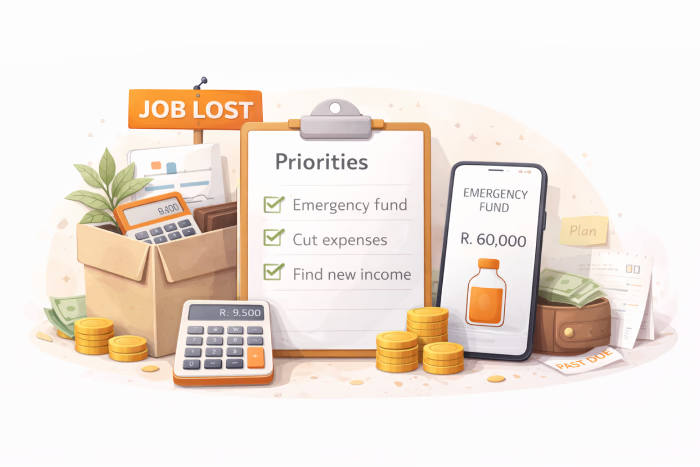
Suggested Alt Text: “Person reviewing monthly budget and job search plan after losing employment”