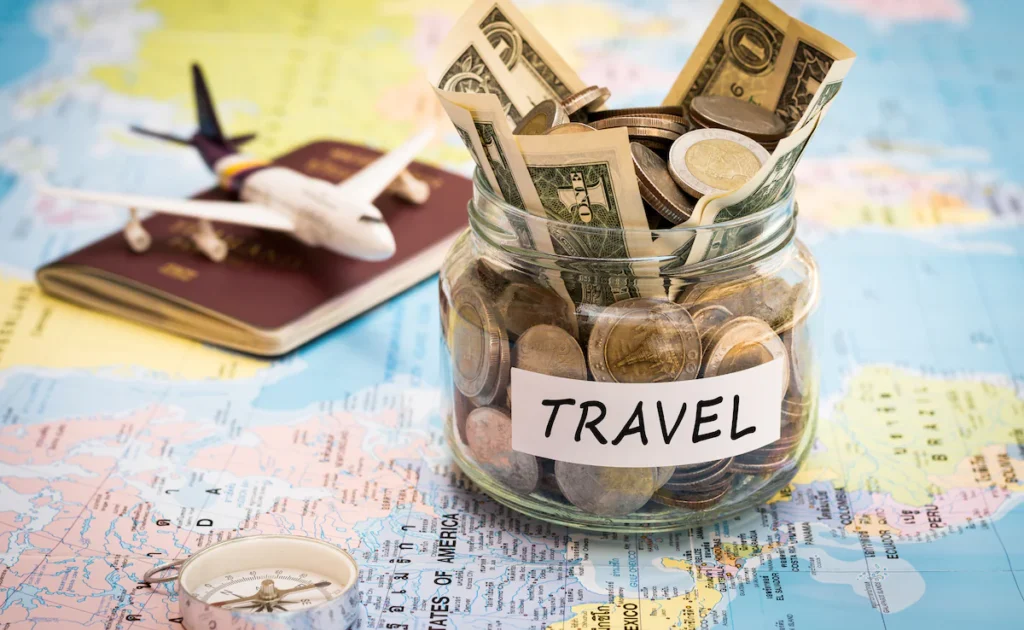
I used to fund vacations by just cutting back randomly wherever I could a month before travel — skip the takeout, delay a purchase — and it always felt stressful and scattered. Learning how to save money for travel properly, as a separate, planned goal, changed that completely.
Treat Travel Savings as a Separate Goal, Not Leftover Money
The single biggest shift is opening a dedicated account or fund just for travel, separate from your regular savings or emergency fund. Mixing it with general savings makes it too easy to quietly dip into it for other things.
In short: set a specific trip cost target, divide it by the number of months until travel, and automate that exact amount into a dedicated account so it never touches your regular monthly budget.
Step 1: Estimate the Real Cost of the Trip
- Flights or transport
- Accommodation
- Daily food and local transport estimate
- Activities and sightseeing
- A buffer of at least 15% for unexpected costs
Underestimating is the most common trip-budgeting mistake — always round up, not down.
Step 2: Set a Realistic Timeline
If your trip is eight months away and you need ₹80,000, that’s ₹10,000 a month. Seeing the number broken down monthly makes it feel achievable rather than overwhelming as one large lump sum.
Step 3: Automate the Transfer
Set up an automatic transfer right after your salary hits your account, into a separate savings account or a recurring deposit. Automating removes the willpower factor — you’re not deciding each month whether to save, it just happens.
Step 4: Find Small, Specific Cuts to Fund It
- Cutting one food delivery order a week can fund a meaningful chunk over several months
- Redirecting a subscription you rarely use directly into the travel fund
- Cashback or reward points redeemed specifically toward travel costs
[link to related guide on zero-based budgeting here]
Use Travel-Specific Savings Instruments
Recurring deposits or even short-term liquid mutual funds can work well for travel savings with a defined timeline, since you know roughly when you’ll need the money and don’t want it locked into something illiquid.
Avoid the Common Trap of Booking Now, Saving Later
Booking flights on a credit card assuming “I’ll save to pay it off” flips the entire process backward and often leads to carrying a balance with interest. Save first, book once the funds exist, even if it means a shorter trip.
[link to related guide on how to choose a credit card here]
FAQ
Should travel savings be kept in a separate bank account? Yes, keeping it physically separate from your everyday spending account reduces the temptation to dip into it for non-travel expenses.
Is it better to save monthly or cut expenses right before the trip? Monthly, planned saving spreads the impact and avoids the stress and corner-cutting that comes with trying to fund an entire trip in the final few weeks.
What if I can’t save the full amount in time? Consider adjusting the trip scope — shorter duration, different destination, or fewer planned activities — rather than funding the gap with a loan or credit card debt.
Are travel credit cards worth it for saving on trips? They can help through reward points and travel-specific benefits, but only if you’re paying the balance in full each month, otherwise the interest cost outweighs the rewards.
How much buffer should I add for unexpected travel costs? At least 15% of your estimated total budget is a reasonable cushion for currency fluctuations, price changes, or unplanned activities.
Conclusion
A trip doesn’t have to come at the cost of your regular monthly budget if you treat it as its own separate, planned goal from the start. Estimate honestly, automate the saving, and resist the urge to book before the funds actually exist. The trip ends up feeling far less stressful when it’s already paid for before you even pack your bags.