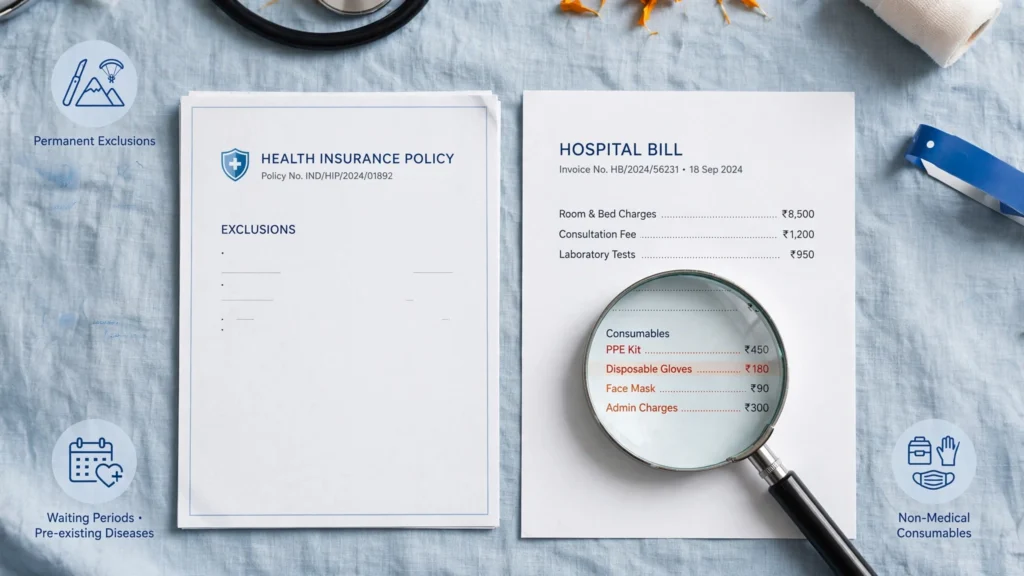
A friend of mine found out the hard way, mid-claim, that her policy didn’t cover the cosmetic part of a surgery she genuinely needed. She wasn’t trying to game the system. She just hadn’t read the fine print. That’s the thing about health insurance exclusions — nobody reads them until they need to.
Most people buy a policy, pay the premium every year, and assume they’re fully protected. Then a claim gets rejected and they’re stuck arguing with the insurer at the worst possible time. Let’s fix that now, while you’re calm and not mid-crisis.
Why Health Insurance Exclusions Exist
Insurers aren’t hiding these clauses out of malice. Health insurance exclusions exist because covering absolutely everything would make premiums unaffordable for everyone. So insurers draw lines — some reasonable, some frustrating.
In short: exclusions are the specific treatments, conditions, or situations your policy won’t pay for, and every insurer lists them differently, so two “similar” policies can behave very differently at claim time.
Pre-Existing Diseases and the Waiting Period Trap
If you had diabetes, hypertension, or thyroid issues before buying the policy, most insurers won’t cover treatment for those conditions for 2-4 years. This is one of the most common health insurance exclusions people get blindsided by.
- Diabetes, BP, thyroid: typically 2-4 year waiting period
- Some insurers now offer 1-year waiting periods, but you pay more for it
- Declaring existing conditions honestly at purchase matters — hiding them can get your whole claim rejected later, not just that condition
Cosmetic and Elective Procedures
Anything considered “cosmetic” — even if it has a medical justification — often falls outside coverage. Rhinoplasty, hair transplants, weight-loss surgery unless medically certified as necessary, dental work beyond accidents. I’ve seen people assume LASIK is covered because it’s “eye related.” It usually isn’t, unless power is above a certain threshold.
Childbirth and Maternity Without a Rider
Standard health policies frequently exclude maternity expenses unless you’ve specifically bought a maternity rider, and even then there’s usually a 2-3 year waiting period attached. Couples planning a family soon should check this well in advance, not after conceiving.
Self-Inflicted Injuries and Substance-Related Claims
Injuries from suicide attempts, self-harm, or accidents caused while intoxicated are near-universally excluded. This one rarely comes up in conversation, but it’s standard across almost every insurer in India.
Alternative Treatments (Sometimes)
AYUSH treatments — Ayurveda, Yoga, Unani, Siddha, Homeopathy — used to be excluded by default. Regulations have pushed insurers to cover them now, but the sub-limits are often tiny, sometimes capped at ₹15,000-25,000 per year regardless of your overall sum insured.
Room Rent Sub-Limits (The Silent Cost-Cutter)
This isn’t technically an “exclusion” but it acts like one. Many policies cap room rent at 1-2% of your sum insured per day. Pick a fancier room than that, and the insurer proportionately cuts your entire claim — not just the room charge, the whole bill.
[link to related guide about choosing the right sum insured here]
How to Actually Check Your Exclusions
- Pull out your policy wordage document, not the brochure
- Search specifically for “waiting period” and “exclusions” sections
- Call the insurer’s helpline and ask directly about your specific concern
- Compare 2-3 policies before renewal — exclusions vary more than people expect
[link to related guide comparing top health insurance plans here]
FAQ
Does health insurance cover dental treatment? Only if it’s due to an accident. Routine dental work like cavities or root canals is almost always excluded unless you have a specific add-on.
Are OPD expenses covered? Traditionally no, though some newer policies now include OPD cover as an add-on, usually at extra cost.
Is COVID-19 treatment still excluded anywhere? Most insurers cover it now under standard hospitalization clauses, but always confirm current terms since policies got updated multiple times.
Can I remove exclusions by paying more? Some, yes — waiting periods can often be reduced or waived with riders. Others, like self-inflicted injury exclusions, generally cannot be bought out.
What happens if my claim is rejected due to an exclusion? You can appeal through the insurer’s grievance cell, and if unresolved, escalate to the Insurance Ombudsman.
Conclusion
Health insurance exclusions aren’t there to trick you, but insurers definitely aren’t going out of their way to explain them either. The five minutes it takes to actually read your policy wording could save you a five-figure shock later. Pull out your policy document this week — not when you’re already at the hospital counter.